
.png)
STILL ALIVE
- 1 day ago
- 4 min read
By Jessica Breazeale, Wesson News
My take on faith, dry seasons and a strange little plant that refuses to stay dead.
I heard about a plant that looks absolutely dead but can come back to life. I was greatly intrigued. So, I bought some to test this knowledge. Yes, this plant looks like it belongs in the trash. Curled up, brown, brittle…the kind of thing you'd sweep off your porch without a second thought.

It's called the Rose of Jericho. Most people know it by a better name: the Resurrection Plant.
Drop it in water, though, and something remarkable happens. Within a few hours it starts to uncurl. Green creeps back into its fronds. What looked dead begins to breathe again. It doesn't strain to come back to life. It simply responds to water, the way it's been designed to for thousands of years.
Scientists call it a desiccation-tolerant organism, meaning it can survive for years in that curled, lifeless-looking state and pick right back up the moment moisture returns.
I brought one of these plants into our church service recently, not for a biology lesson, but because I think a lot of us know exactly what it feels like to feel, even look, curled in on ourselves, brown at the edges, wondering if whatever used to be alive in us is ever coming back.
We decided to have an honest conversation about the real cry of a dry season.
King David wrote in Psalm 63, "O God, you are my God; earnestly I seek you; my soul thirsts for you... as in a dry and weary land where there is no water." He wasn't writing from a palace. He was in the wilderness, on the run, surrounded by trouble.
What stands out is what David doesn't do. He doesn't fake it. He doesn't open with "I'm blessed and highly favored" when what he actually feels is parched and far from home. He just says: I am thirsty. This is dry ground.
Faking it will only get you so far. To real…is to heal. David was real in his honest cry.
A lot of us have been performing "fine" for a long time. The dry season crept in so quietly we barely noticed — a prayer life that went silent, a Bible that stopped landing the way it used to, a church service where we sat and felt nothing at all.
Know this: Dry is not dead. Thirsty is not forsaken. But you have to be honest about where you are before anything can change. Try speaking to what looks finished.
In Ezekiel 37, God sets the prophet down in a valley full of bones — "very dry" bones, the text says. Not recently dead. Long gone. The kind of dry that means people had written the whole thing off and moved on.
God asks Ezekiel, "Can these bones live?" And Ezekiel doesn't say yes. He says, essentially, You know. I sure don't. He didn’t pretend he knew the answer. He submitted to the One who KNEW.
God tells him to prophesy anyway — to speak to what looks finished.
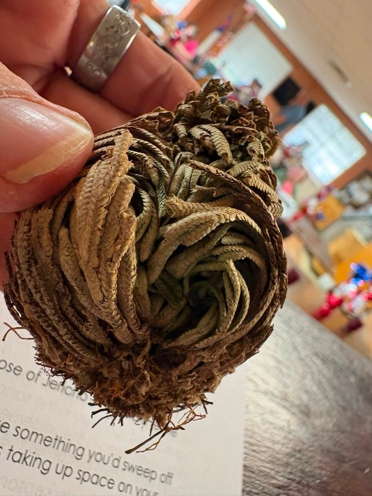
That resurrection plant doesn't know it's "supposed" to be dead. It doesn't read the room. Its whole design is built for coming back. Death was never its final state; dormancy was.
So what have you already declared dead that might not actually be finished?
A relationship gone cold?
A dream shelved because the door never opened?
The version of yourself that used to be hopeful, before life wore you down?
Resurrection rarely shows up all at once, either. In Ezekiel's vision, it comes in stages: first, a rattle, then bones connecting, then sinew, then flesh, then lastly…breath.
By the time we get to John 11, Martha has lost her brother, Lazarus, and she tells Jesus plainly: if you'd been here, he wouldn't have died. She believes in resurrection — just as a someday, far-off, last-day kind of event.
Jesus stops her right there. "I am the resurrection and the life," He says. Present tense. Not someday. Now.
Four days after Lazarus died, Jesus called him out of the tomb by name, well past the point most people had given up hope. And He did it anyway.
What a dry season isn't
A dry season isn't abandonment. The capacity for life is still there, just waiting on water.
It isn't punishment. Sometimes the wilderness is simply the road between two places you're being led. And it isn't permanent. It has a duration, even when you can't see the end of it from inside it.

The resurrection plant doesn't have to talk itself into living again. It just has to be placed in water. That's it. No coaching required.
If you're in a dry season right now…curled in, brown at the edges, wondering if there's any life left in you — here's the word for today: you are not dead. You are dormant.
And the water is closer than you think. Only takes a little water to get that party started. And real living is definitely what you really want!

This reflection is drawn from a recent sermon. My personal photos of an actual Rose of Jericho — shown both in its dried, dormant state and after being revived with water — accompany this blog post.


Comments